The honest answer: for the right business, Pinterest is one of the most undervalued channels available. For the wrong business, it is a time sink. The difference comes down to what you sell and how people decide to buy it.
Why Pinterest behaves differently
On most social platforms, people are there to be entertained, and your marketing interrupts them. On Pinterest, people arrive planning something: a kitchen renovation, a wedding, a wardrobe, a garden, this week’s dinners. They are searching with intent, often months before they spend.
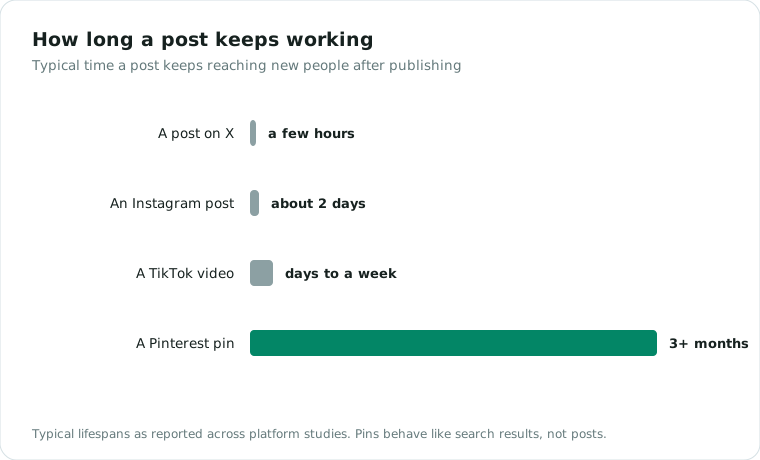
That changes the economics. A pin is closer to a search result than a social post, and pins keep circulating for months or years. A good pin from last summer can still send you traffic today, which is something no Instagram post will do.
Pinterest is probably worth it for you if
- Your product is visual and plannable. Home goods, décor, fashion, food, weddings, beauty, DIY, travel. If people make mood boards about your category, you belong there.
- Your customers plan ahead. Pinterest users start searching well before they buy, so you reach them before your competitors’ ads do.
- You sell online. Product pins link straight to product pages, and the browse-to-buy path is short.
- You have decent photography, or you are willing to invest in it. Image quality is the whole game.
It is probably not worth it if
- You sell urgent or invisible services. Nobody plans an emergency electrician on a mood board.
- Your buyers are strictly local and your product is not visual. A local accountancy gains little here.
- You cannot commit to consistency. Ten fresh pins a month beats a hundred pins posted once and abandoned.
What working Pinterest actually looks like
- A business account with a keyword-rich profile and boards organized around what customers search, not around your internal categories.
- Pins designed for the format: vertical, readable text overlay, one clear subject.
- Keyword-optimized titles and descriptions, because Pinterest is a search engine wearing a social network’s clothes.
- Patience. Organic Pinterest compounds over three to six months. Pinterest Ads can shortcut the wait once you know which pins convert organically.
The verdict
If you checked the “worth it” boxes above, Pinterest deserves a place in your plan, usually alongside SEO, since the two share the same long-compounding logic. If you did not, spend the effort on channels that match how your customers actually buy.
Unsure which side you land on? Ask us in a free audit and we will give you a straight yes or no for your specific business, with reasons.